A decade is a reasonable period of time for true reflection and learning, so let’s think back to 2014 and review what happened to Australia’s Asian engagement strategy over the past 10 years:
- In November 2014, after many years of patient and complex negotiation, Australia and China signed a Declaration of Intent to formalise the China Australia Free Trade Agreement (ChAFTA). The FTA was formally signed on 17th June 2015 in a ceremony at Parliament House in Canberra
- For the next few years, all roads lead to China as the single most attractive market for Australian business in Asia. Austrade was commissioned to promote China trade, official Federal and State Government missions were organised to visit China, Chinese delegations were welcomed in Australia and bilateral trade and investment soared (notably in education, tourism, wine, beef, dairy and others, aswell as the longer term performers of iron ore and coal which saw further uplifts in volumes, pricing and margins). This was a particularly lucrative period for Australian exporters who enjoyed relatively easy access and logistics together with high premium prices which Chinese affluent consumers seemed willing to pay to buy high quality products from Australia’s renowned ‘clean and green’ environment.
- In April 2020, only a few months after the outbreak of the Covid19 virus, the Australian Government called for an independent review of the origins of Covid and accused China of a lack of transparency. This was the start of a significant deterioration in the Australia China diplomatic relationship which resulted in China imposing severe restrictions on a number of Australian products sold in China (wine, barley, beef, timber; coal, cotton and lobsters) which effectively ended China trade in all but coal and iron ore. Over the past 18 months, the new Albanese Government has sought to stabilise the relationship and re-establish Australia’s trading relationship with China which has led to the lifting of many of these restrictions
- On 3rd September 2024, at the AFR Asia Summit in Melbourne, Australia’s Foreign Minister, Penny Wong, reflected on the past decade by saying “most of the discussion about Asia in Australia is about China” and urged the business community to “deepen partnerships with more countries with shared interests and diversify our economy, especially through Southeast Asia”. She encouraged everyone to read a new report: Australia’s Southeast Asia Economic Strategy to 2040 which seeks to address and reverse some alarming statistics:
- ASEAN’s share of FDI stocks from Australia fell from 6.3% in 2017 to 2.9% in 2022. In comparison, Southeast Asia’s share of global FDI has increased over the past two decades from 3.6% to 6.9%.
- Between 2000 and 2021, Southeast Asia’s global inflows of direct investment stock increased by 13% p.a.. Australia’s investment stocks increased by 8% a year over the same period.
- Between 2016 and 2020, US and China doubled their investment into Southeast Asia. Canada quadrupled theirs. Australia’s halved.
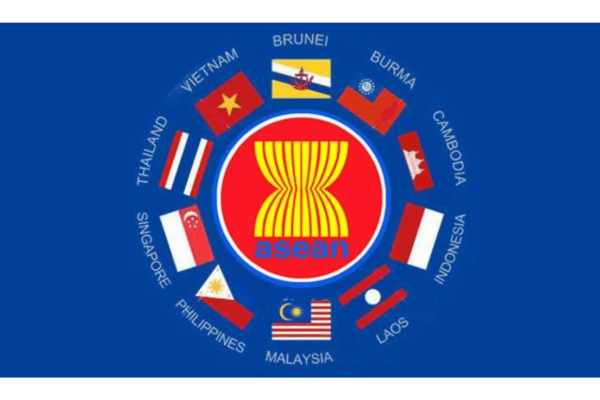
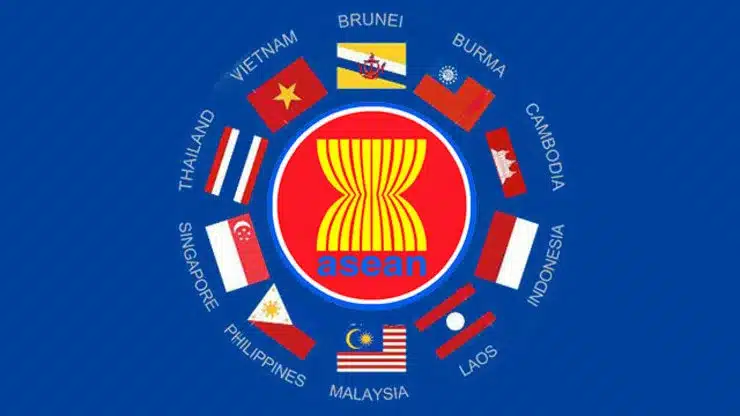
- A few days later, on 6th September 2024 at the ASEAN Summit in Jakarta, Prime Minister Albanese launched the Australia’s economic and investment strategy for Southeast Asia (as set out in the report above) saying “the centrality of ASEAN is vital to Australia’s future” and that the strategy represented “the most significant upgrade of Australia’s economic engagement with ASEAN for a generation.” He identified 10 priority sectors offering the most potential for growth: agriculture and food, resources, green energy transition, infrastructure, education and skills, tourism, health care, digital economy, professional and financial services and creative industries.
So what do we make of all this? In 2014, the Government of the day announced that China was Australia’s “forever friend’ and spent millions supporting Australian business in China. 10 years later, the focus has now shifted to ASEAN and we will start to see new activities (missions, events, conferences, workshops etc.) in the diverse and disparate markets of Indonesia, Thailand, Malaysia, Vietnam, Singapore and the Philippines.
There is no doubt that Australia has a lot to offer the Asian region in terms of investment, trade and cultural alignment (don’t forget that, in the 2021 census, 17.4% of the Australian population was identified as having Asian ancestry, and this number is growing rapidly). What’s missing is consistency in Government policy and a long term resolve (Australians have a reputation in Asia for ‘turning up, making a lot of noise and never coming back!’).
Will it be different this time?